
Discipline rarely begins with a major life decision.
More often, it begins quietly.
A child steps onto a mat. A coach gives an instruction. A movement feels awkward. A stance feels uncomfortable. The room is unfamiliar. The rules are new. Nobody knows what that child will become.
There is no championship yet.
No title.
No audience.
No applause.
Just the first lesson.
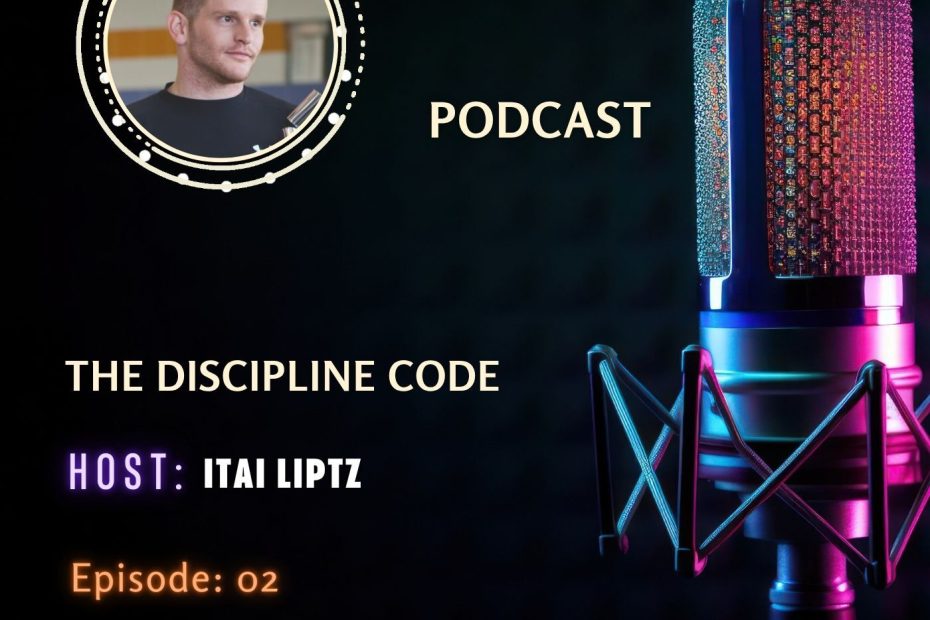
Episode 2 of The Discipline Code, hosted by Itai Liptz, goes back to that kind of beginning. The Seven-Year-Old on the Mat is not only a story about martial arts. It is a story about how early habits, repeated over time, can shape the way a person thinks, learns, responds to pressure, and stays committed when progress is slow.
The episode asks an important question:
What happens when discipline starts young?
That question matters because many people think discipline appears later in life, once someone becomes serious, ambitious, or successful. But in many cases, discipline starts long before anyone is watching. It starts through repeated exposure to structure, effort, respect, correction, and responsibility.
For Itai Liptz, martial arts became one of those early environments.
The mat became more than a place to train.
It became a place to learn how commitment works.
Explore the full podcast hub here:
The Discipline Code Podcast on ItaiLiptz.meWatch and Listen to Episode 2
YouTube Player
Why Does Starting Young Matter?
Starting young does not guarantee success.
It does something more important.
It gives discipline time to become familiar.
A child who enters martial arts at seven is not thinking about long-term performance. They are not calculating the value of repetition, patience, or self-control. They are simply learning what the environment asks of them.
Stand here.
Listen.
Try again.
Respect the instructor.
Respect the training partner.
Control the body.
Control the reaction.
Return tomorrow.
Those lessons may sound small, but small lessons repeated often become powerful.
Early training teaches a child that improvement is not instant. A kick does not become clean after one attempt. Balance does not appear because someone wants it badly enough. Confidence does not arrive before practice. It comes after a child has tried, failed, corrected, and tried again enough times to trust the process.
That is one of the strongest lessons martial arts can offer.
Progress is earned.
Not wished for.
Not rushed.
Earned.
That idea can stay with a person for the rest of their life.
A student who learns this early may carry it into school. A young athlete may carry it into competition. An adult may carry it into business, leadership, education, parenting, or personal growth.
The setting changes, but the lesson remains.
If something matters, you return to it.
What Does the Mat Teach That Ordinary Advice Cannot?
Many people hear advice about discipline.
Martial arts makes a person practice it.
That difference matters.
A lecture can explain focus. The mat demands it.
A book can describe resilience. Training tests it.
A motivational quote can praise consistency. A martial arts class requires it week after week.
This is why the mat is such a powerful teacher. It does not allow discipline to remain abstract.
A child has to move.
A child has to listen.
A child has to wait.
A child has to control frustration.
A child has to repeat a technique even after getting it wrong.
That kind of learning reaches deeper than words. It becomes physical. It becomes emotional. It becomes part of the way the person responds to difficulty.
In Episode 2 of The Discipline Code, Itai Liptz explores how those early experiences can shape the foundation of lifelong commitment. The focus is not only on becoming a better martial artist. The deeper lesson is becoming the kind of person who understands that improvement requires time.
The mat also teaches humility.
No matter how talented someone is, they will be corrected. They will meet someone more experienced. They will have days when their body does not cooperate. They will face the uncomfortable truth that effort matters more than image.
That can be difficult.
It can also be life-changing.
Humility keeps a person coachable. It makes learning possible. It reminds the student that growth begins when they stop pretending to know everything.
For a child, that lesson can become a lifelong advantage.
How Do Early Habits Become Lifelong Patterns?
A habit is not only an action.
It is a repeated answer to a repeated situation.
When a child feels tired but goes to training anyway, they are practicing one answer.
When a child feels frustrated but listens to correction, they are practicing another.
When a child loses a round but bows with respect, they are practicing another.
Over time, those answers become patterns.
That is where early discipline becomes powerful.
The goal is not to create a perfect child, a perfect athlete, or a perfect student. The goal is to create a pattern of returning to the work.
That pattern can follow a person for decades.
Someone who has trained since childhood often understands something that others may learn much later: commitment is not always emotional. It is not always exciting. It is not always rewarded immediately.
Sometimes commitment is simply doing what the process requires.
That kind of discipline is not loud.
It does not need attention.
It becomes part of the person.
This is why Episode 2 is such an important part of The Discipline Code. Episode 1 explains that discipline is a system, not a personality trait. Episode 2 shows where that system can begin.
It can begin with a child on a mat.
It can begin with a repeated class.
It can begin with a coach who expects effort.
It can begin with the quiet decision to return.
Why Is Repetition So Important?
Repetition is often misunderstood.
Some people think repetition is boring. Others think it is only useful for physical skills. Martial arts shows that repetition does much more than sharpen technique.
It trains attention.
It builds patience.
It exposes weakness.
It creates rhythm.
It teaches the body and mind to stay with a task long enough to improve.
A child practicing the same movement again and again is not only learning how to strike, block, or move. They are learning how mastery feels before mastery appears.
That lesson is rare.
Many people quit because they do not see results fast enough. They assume slow progress means failure. Martial arts teaches the opposite. Slow progress is often the normal path.
A stance becomes stronger by being held.
A movement becomes cleaner by being repeated.
A reaction becomes calmer by being tested.
A person becomes more disciplined by returning.
This applies far beyond martial arts.
Writing improves through repetition.
Leadership improves through repetition.
Study habits improve through repetition.
Business judgment improves through repetition.
Communication improves through repetition.
The person who respects repetition has an advantage because they stop chasing shortcuts and start building skill.
That is one of the central messages of The Seven-Year-Old on the Mat.
The early years matter because they teach a person to respect the process before the outcome arrives.
Is It Ever Too Late to Build Discipline?
This episode begins with a child, but it is not only for people who started young.
That is important.
Someone may hear a story about martial arts at age seven and think they missed their chance.
They did not.
Starting young can shape a strong foundation, but discipline can be built at any age. The method remains the same: structure, repetition, accountability, and a willingness to keep returning after difficulty.
A seven-year-old learns this on the mat.
An adult can learn it through training, work, study, recovery, leadership, or service.
The starting point is different, but the principle is the same.
Begin with one repeatable action.
Do it consistently.
Create an environment that supports it.
Expect resistance.
Return anyway.
That is how discipline is built.
The mistake is believing that the past decides everything. It does not. Early habits matter, but present habits matter too. A person cannot change when they started, but they can change what they practice now.
That is one reason The Discipline Code speaks to more than athletes. It speaks to anyone who wants to build a stronger life through better systems.
Students can use these lessons.
Professionals can use them.
Entrepreneurs can use them.
Parents can use them.
Leaders can use them.
The question is not whether someone started at seven.
The question is whether they are willing to start now.
Why Episode 2 Matters
Episode 2 matters because it connects discipline to origin.
It shows that commitment is not built in one dramatic moment. It is built through early choices, repeated lessons, and environments that teach responsibility before success appears.
In Itai Liptz’s story, the mat was the beginning.
It was where discipline became physical.
It was where repetition became normal.
It was where respect, patience, effort, and resilience were practiced before they were fully understood.
Those lessons later became part of a larger journey through martial arts, competition, leadership, education, and personal development.
That is what makes The Seven-Year-Old on the Mat more than a childhood story.
It is a reminder that the foundation matters.
What people practice early can shape how they respond later. But it is also a reminder that the code can begin wherever a person decides to build it.
The mat may be literal for some people.
For others, the mat may be a classroom, a workplace, a gym, a business, a family responsibility, or a private goal that nobody else sees.
The location is not the point.
The commitment is.
Listen to Episode 2 of The Discipline Code
Use the links below to listen to The Discipline Code Podcast by Itai Liptz across major podcast platforms.
Official Podcast Pages
Podcast Hub: The Discipline Code Podcast on ItaiLiptz.me
Additional official podcast pages: The Discipline Code Podcast by Itai Liptz | The Discipline Code on ItaiLiptz.co
FAQ
What is Episode 2 of The Discipline Code about?
Episode 2, The Seven-Year-Old on the Mat, explores how early martial arts training can shape discipline, commitment, self-control, resilience, and lifelong personal growth.
Why does starting martial arts young matter?
Starting martial arts young can help build patterns of focus, respect, repetition, patience, and emotional control. These habits can influence how a person approaches learning, pressure, setbacks, and long-term goals later in life.
Is it too late to build discipline if someone did not start young?
No. Starting young can create a strong foundation, but discipline can be built at any age through structure, repetition, accountability, and consistent action.