
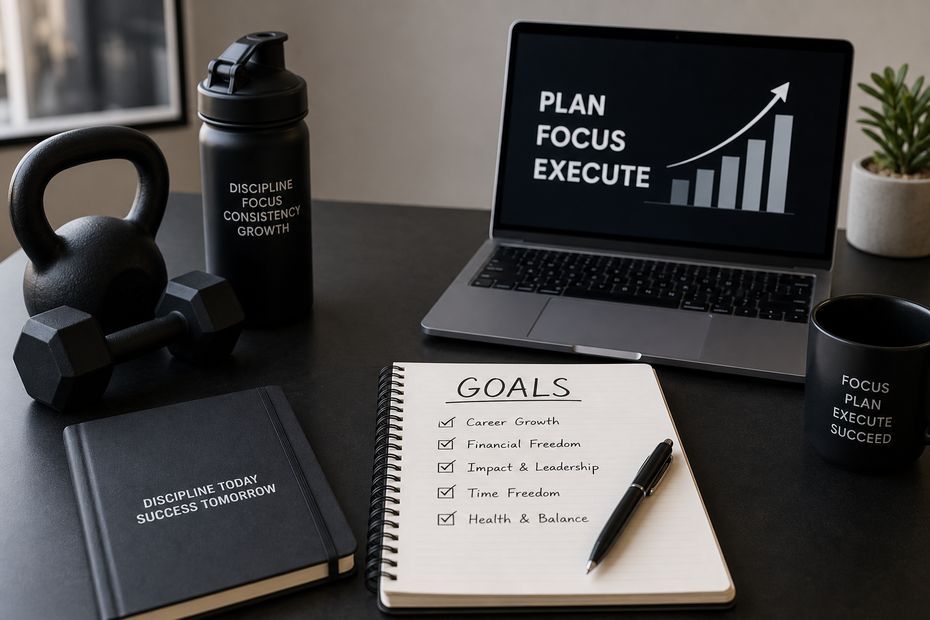
Athletic discipline builds a sustainable business career by teaching you to pace effort, recover on purpose, accept feedback, and pursue goals that take years to reach. Sustainable business discipline depends less on constant intensity and more on managing your energy so strong performance can continue.
Many careers stall because capable professionals treat every deadline like a championship match. You need a better operating method, one that combines focused effort with preparation, review, and recovery. The habits developed through athletic training offer a practical model you can apply to leadership, entrepreneurship, and long-term career development, even if you’ve never played competitive sports.
How Does Athletic Discipline Support Career Longevity?
Athletic discipline supports career longevity by teaching you to distribute effort across a long season. You learn that maximum intensity is useful in short bursts, but it cannot become your permanent working speed.
Business careers can last several decades, which means one demanding quarter or successful launch represents only a small part of your working life. Treating every task as an emergency raises the risk of decision fatigue, poor judgment, and declining motivation. An athletic training mentality helps you identify when to push, when to maintain pace, and when to reduce your workload. This protects your performance without lowering your standards.
You can apply this principle by dividing your year into focused work periods, maintenance periods, and recovery periods. A product launch may require longer hours for a limited time, followed by lighter meetings and fewer major decisions. A promotion may call for concentrated skill development, followed by time to stabilize your routines. Sustainable business discipline gives intense effort a defined purpose and endpoint.
How Do Athletic Skills Translate To Business Success?
Athletic skills translate to business through resilience, delayed gratification, preparation, teamwork, and performance under pressure. These abilities help you keep moving when results arrive slowly or plans need to change.
Research from EY and espnW reported that 94 percent of women in the executive suite had played sports, with more than half participating at the university level. The finding shows a strong correlation between athletic participation and senior leadership, though athletic experience alone does not cause executive success. Deloitte has also reported that former university athletes tend to display strong leadership and resilience in the workplace. Their familiarity with schedules, team responsibilities, measurable goals, and coaching can help them adjust to professional demands sooner.
Sports also teach you to separate preparation from outcome. You can follow a sound training plan and still lose a match, just as you can prepare a strong proposal and still lose the client. Athletic discipline directs your attention toward controllable actions: research quality, communication, practice, follow-up, and execution. That habit reduces emotional swings and helps you make measured decisions after disappointing results.
What Is The Athlete Mindset In Business?
The athlete mindset in business is the habit of treating performance as something you train rather than something you either possess or lack. You set measurable goals, practice useful skills, review results, and adjust your routines.
This mindset changes how you respond to difficulty. A rejected proposal becomes information about positioning, timing, price, or communication. A missed promotion can reveal gaps in visibility, technical ability, leadership experience, or internal relationships. You still acknowledge the disappointment, but you do not let one result define your professional ability.
Grit also supports this long-term mentality. Character Lab defines grit as passion and perseverance directed toward long-term goals, connecting sustained effort with achievement over extended periods. In business, grit can mean developing expertise before recognition arrives, staying committed through a slow sales cycle, or improving a product after an unsuccessful release. Used properly, grit includes adjusting your method rather than repeating ineffective work out of stubbornness.
How Do You Transfer Discipline From Sports To Work?
You transfer discipline from sports to work by converting goals into scheduled behaviors. Instead of relying on motivation, you build routines that make preparation, execution, and review part of your normal week.
Start by identifying the business behavior you can control. Revenue is an outcome, but prospecting calls, account reviews, proposal quality, and follow-up speed are measurable actions. Promotion is an outcome, but skill development, reliable delivery, relationship building, and leadership practice are actions. Tracking these behaviors gives you the business equivalent of a training log.
You can also create a weekly performance rhythm. Reserve focused time for demanding work, schedule administrative tasks during lower-energy periods, and hold a short review at the end of the week. Compare your planned work with what you completed, then identify one adjustment for the coming week. Small corrections made regularly are easier to sustain than dramatic resets made after months of frustration.
How Does Recovery Prevent Business Burnout?
Recovery prevents burnout by restoring the physical and mental resources required for sound judgment. Rest is part of performance management, not a reward you earn after exhaustion.
Harvard Business Review’s corporate athlete model connects sustained performance with energy management rather than time management alone. Your calendar may contain enough open hours, yet depleted attention can make those hours less useful. Sleep, movement, breaks, and boundaries help preserve the quality of your decisions. Regular aerobic exercise may also support executive function and memory, according to research highlighted by the American Academy of Neurology.
Recovery should match the type of strain you experience. After several days of detailed analysis, recovery may involve physical activity and reduced screen time. After frequent travel or customer meetings, you may need quiet planning time and fewer conversations. Building recovery into your schedule before fatigue peaks makes your workload easier to maintain across months and years.
How Can You Accept Feedback Like An Athlete?
You can accept feedback like an athlete by separating evaluation of your performance from evaluation of your worth. Feedback should identify what happened, why it happened, and what you will change during the next attempt.
Athletes regularly review game footage, statistics, positioning, and decisions. You can create a similar feedback loop through project reviews, sales call evaluations, customer comments, and manager check-ins. Focus the discussion on observable behavior rather than vague judgments. “The presentation used too much technical language” gives you a usable adjustment; “the presentation was weak” does not.
Learning agility strengthens this process. Korn Ferry identifies learning agility as an important predictor of leadership potential and executive success. You display it when you absorb new information, test a different method, and apply the lesson under changing conditions. This reduces ego-driven defensiveness and turns criticism into a source of practical improvement.
Can Non-Athletes Build Sustainable Business Discipline?
You can build sustainable business discipline without an athletic background. The value comes from adopting repeatable habits, not from having competed on a team or earned a sports scholarship.
Choose one professional skill and treat it as a trainable ability. A new manager can practice giving concise feedback, a founder can rehearse investor presentations, and a salesperson can review recorded calls. Define the skill, schedule practice, measure execution, and request specific coaching. Repetition creates familiarity, and familiarity makes reliable performance easier under pressure.
Graded difficulty also helps you develop confidence without taking reckless risks. Begin with smaller presentations before addressing senior leaders, manage a limited project before leading a large program, or test an offer with a narrow customer group before expanding it. Raise the difficulty after you demonstrate control at the current level. This mirrors athletic progression and reduces the cost of learning.
Are Former Athletes Better Business Leaders?
Former athletes are not automatically better leaders, but athletic experience can develop behaviors that support good leadership. The result depends on whether you transfer those behaviors thoughtfully and continue learning.
Team sports can teach role clarity, shared accountability, preparation, and trust. Individual sports can strengthen self-regulation, concentration, and personal responsibility. Leadership requires additional abilities, including listening, commercial judgment, communication, and the capacity to develop other people. Athletic habits create useful foundations, but they do not replace professional competence.
The strongest leaders also know when competitive instincts become counterproductive. Treating colleagues as opponents can weaken trust, and refusing to rest can normalize unhealthy work patterns. A sustainable leader directs competitive energy toward better service, stronger execution, and shared goals. You measure success through the team’s performance and durability, not personal visibility alone.
What Is The Connection Between Sports And Business Success?
- Resilience: Setbacks become usable data.
- Feedback: Coaching guides improvement.
- Recovery: Rest protects performance.
- Grit: Long-term goals guide daily work.
Build A Career That Can Keep Performing
A sustainable business career requires more than ambition and long hours. You need routines that support focused work, honest review, gradual improvement, and planned recovery. Athletic discipline gives you a practical way to manage those demands without confusing exhaustion with commitment. Build your schedule around repeatable behaviors, measure what you control, and adjust when the evidence calls for change. The real value of sustainable business discipline is your ability to perform well today without reducing your capacity to perform tomorrow.
References
- EY and espnW: Why Female Athletes Make Winning Entrepreneurs
- Deloitte: Collegiate Athlete Workplace Study
- Character Lab: Grit
- American Academy of Neurology: Aerobic Exercise, Executive Function, and Memory
- Korn Ferry: The Organizational Athlete
- Harvard Business Review: The Making of a Corporate Athlete
- American Psychological Association: Stress Effects on the Body.
Leave a Reply Cancel reply